The 4-Part Omnichannel Authority System That Turns Your Expertise Into a Steady Stream of Inbound Clients

Share this article

You are genuinely good at what you do. Your clients get results. Your referrals trust you. And yet your pipeline is unpredictable, your online presence is thin, and most of your ideal clients have never heard of you. Here is the system that fixes that.

There is a particular frustration that coaches, consultants, and service providers know well. You have spent years developing real expertise. You deliver genuine results for your clients. You know what you are talking about, and the people who have worked with you know it too. But when a potential client who has never heard of you searches for the kind of help you provide, you are nowhere.

The problem is not your expertise. The problem is visibility, and more specifically, the lack of a system that turns your expertise into consistent, visible authority across the channels where your ideal clients are already spending their time.

This post breaks down the four-part omnichannel authority system that solves this problem. It is not a collection of marketing tactics. It is an integrated framework where each part makes the others more powerful. By the end, you will understand not just what the four parts are, but why they have to work together to produce the kind of results most consultants want: a steady, predictable stream of inbound clients who already trust you before they ever reach out.


Why Piecemeal Marketing Keeps Experts Invisible

Before getting into the system itself, it is worth naming the pattern that keeps most consultants stuck. The issue is almost never effort. Most consultants who are struggling with visibility are actually working quite hard on their marketing. They post on LinkedIn. They send occasional email newsletters. They may run ads or attend networking events. They have a website that describes what they do.

The problem is fragmentation. Each piece of marketing activity is disconnected from the others, which means each piece is working much harder than it needs to for much less result than it should produce.


Problem 01

Content without distribution

Great posts and articles that nobody sees because there is no system for getting them in front of the right people.

Problem 02

Traffic without follow-up

Visitors land on a website, read something useful, and leave. No capture mechanism, no nurture sequence, no second chance.

Problem 03

Ads without authority

Paid traffic sent to an underdeveloped presence. The prospect clicks, sees nothing that builds trust, and exits without converting.

Problem 04

Visibility without conversion

Growing an audience or social following that never translates into actual client inquiries because there is no clear next step.

The fix is not doing more of any one of these things. The fix is connecting them. When authority, distribution, conversion, and nurture are built as a single integrated system, the result is fundamentally different from anything piecemeal marketing can produce.

"Growth does not come from doing more marketing. It comes from doing it together."

The 4-Part OmniVisibility System

Here is how the system is structured and what each part is actually doing.


Part 1

Authority

Build the foundation of trust and positioning

Part 2

Distribution

Spread your authority across channels

Part 3

Conversion

Turn attention into real opportunities

Part 4

Nurture

Compound trust and drive action over time

Part 1 Authority and Trust: Becoming the Obvious Choice

Authority is not a title you claim. It is a position you earn through consistent demonstration of expertise over time. In practical terms, this means producing long-form content that actually teaches something, taking a clear positioning stance on what you do and who you serve, and building a body of work that makes it obvious why someone should choose you over every other option.

For consultants and coaches, the most powerful authority-building vehicle is depth. A single substantive article, case study, or piece of analysis that genuinely helps your ideal client understand something important will do more for your positioning than fifty generic social posts. The goal is not to be everywhere. The goal is to be the most useful, most credible voice in your specific niche.

Authority content serves a dual purpose. It builds trust with humans who read or watch it, and it signals relevance to search engines and AI tools that are increasingly being used to find and recommend service providers. When a potential client asks ChatGPT or Google who they should talk to about a specific problem, the names and resources that surface are the ones with a documented body of authoritative content. Without this foundation, everything else in the system underperforms.

What this looks like in practice

Long-form blog posts, in-depth LinkedIn articles, podcast appearances, YouTube videos, and detailed case studies. Content that demonstrates thinking, not just describes services. A clear point of view on what you believe, what you reject, and why your approach produces results.

Part 2 Omnichannel Distribution: Getting Your Authority in Front of the Right People

This is where most consultants make the fragmentation mistake. They create strong content and then post it in one place, usually the channel they feel most comfortable with. The problem is that your ideal clients are not all in one place. They are scattered across LinkedIn, search, email, YouTube, podcasts, and social platforms, and they consume content in different formats depending on where they are and what they are doing.

Effective distribution means taking a single core piece of authority content and systematically deploying it across the channels where your audience lives. A single long-form article becomes a LinkedIn post, a short video, an email to your list, a search-optimized blog post, and potentially a guest appearance or podcast pitch. The core idea is the same. The format and platform are adapted for how each channel is actually used.

The strategic principle behind this is reach with relevance. You are not trying to be on every platform for its own sake. You are trying to ensure that your ideal client, wherever they happen to be, has a meaningful chance of encountering your thinking at the moment they are searching for a solution you provide. A single channel gives you a single shot. An omnichannel distribution system gives you multiple compounding points of entry.

What this looks like in practice

Content repurposed intentionally across LinkedIn, email, search, short-form video, and owned media. Each channel adapted to its native format. Consistent messaging that reinforces the same positioning everywhere a potential client encounters your brand.

Part 3 Conversion and Capture: Turning Attention Into Real Opportunities

This is the part most consultants skip entirely, and it is the reason that genuinely good visibility efforts produce so little in the way of actual client conversations. Someone reads your article, nods along, finds it genuinely useful, and then closes the tab. They have no easy path to take the next step with you. No lead magnet, no clear call to action, no frictionless way to raise their hand and say they want to learn more.

Conversion infrastructure means building the paths that turn a passive reader or viewer into an active prospect. This includes a compelling offer for someone who is not yet ready to buy (a free resource, a diagnostic, a short consultation), clear and specific calls to action on every piece of content, and landing pages that are designed around what the prospect wants to do rather than what you want to say about yourself.

The key insight is that people who consume your content are already self-selecting as interested. The job of conversion infrastructure is simply to make it easy for them to take the next natural step rather than leaving the decision entirely up to them. A potential client who reads your content and feels a pull toward working with you is in the best possible state to convert. If there is no clear, low-friction next step available to them at that moment, most of them will not come back.

What this looks like in practice

A diagnostic or assessment offer (like the Visibility and Growth Blueprint at Level Next), lead magnets tied directly to the content your ideal clients are consuming, clear CTAs on every content piece, and landing pages focused on the prospect's desired outcome rather than a generic service description.

Part 4 Nurture and Compounding: Building the Trust That Closes Deals

Most service purchases, especially at higher price points, do not happen on first contact. A potential client discovers your content, reads something useful, and then goes quiet for weeks or months before they are actually ready to make a decision. If there is no system in place to stay in front of them during that window, they will either forget you exist or find someone else who stayed more consistently present.

Nurture is the system that solves this. An email sequence that delivers genuine value over time, a newsletter that keeps your thinking top of mind, retargeting that ensures people who have engaged with your content continue to see relevant content from you. The goal is not to pressure prospects into a decision. The goal is to continue building the relationship and demonstrating expertise until the moment they are ready to act, at which point you want to be the obvious first call they make.

This is also where the compounding effect of the system becomes visible. Each piece of content that goes into the nurture system is working for you continuously. A lead who enters your email sequence today will receive your best thinking over the following weeks regardless of what else you have going on. The system runs, the trust builds, and the inbound inquiry eventually comes, often from someone who has been following your work quietly for months.

What this looks like in practice

Email nurture sequences built around the problems your ideal clients are trying to solve. A consistent newsletter that delivers real value. Retargeting ads that keep your content in front of people who have already shown interest. Every touchpoint reinforcing the same positioning and moving the prospect naturally toward a conversation.

Why the Four Parts Have to Work Together

Each of these four parts is valuable on its own. But the real power of this system comes from integration. Here is why each part makes the others more effective.

Authority without distribution means your best content never reaches the people who need it. Distribution without authority means your content reaches people but does not earn their trust. Authority and distribution without conversion means you build an audience that never becomes clients. And all three without nurture means you lose the prospects who were not quite ready to buy the first time they encountered you.

When all four parts are connected and working from the same positioning, the same messaging, and the same understanding of your ideal client's situation, something shifts. Your marketing stops being a series of individual efforts and starts being a system. Each new piece of content strengthens your authority, expands your distribution, feeds your conversion infrastructure, and adds to your nurture ecosystem simultaneously. Every month, the system becomes more effective than it was the month before.


The compounding difference

A fragmented marketing approach produces linear results at best: you put in effort, you get some output, you stop and the output stops. An integrated omnichannel system produces compounding results: each month builds on the previous month, authority grows, distribution expands, and the pipeline becomes progressively more full with less incremental effort required over time.


Who This System Is Built For

This framework produces the best results for established coaches, consultants, and service providers who have real expertise and real results to point to, but whose online presence does not yet reflect the quality of the work they do. If you are still figuring out your offer or your market, the system will work, but the foundation of your authority content needs to be solid first.

It also works best for service businesses that sell expertise rather than commodities. If the reason someone should hire you is the quality of your thinking and the depth of your knowledge, an omnichannel authority system is the most effective way to communicate that value at scale. You are essentially taking what makes you excellent in a room with one client and making it legible to hundreds of potential clients at the same time.


Frequently Asked Questions


What is an omnichannel marketing system for consultants?

An omnichannel marketing system for consultants is an integrated framework that connects content creation, multi-channel distribution, lead conversion, and long-term nurture into a single compounding growth engine. Unlike piecemeal marketing where each tactic operates independently, an omnichannel system is designed so every part reinforces the others, producing authority and inbound client flow that grows over time rather than requiring constant manual effort.


How do I get inbound clients as a consultant without relying on referrals?

Building inbound client flow as a consultant requires three things working together: a documented body of authority content that demonstrates your expertise, a distribution system that gets that content in front of your ideal clients across multiple channels, and a conversion path that makes it easy for interested prospects to take the next step. Referrals are valuable but unpredictable. An omnichannel authority system creates a repeatable, scalable alternative that grows stronger over time.


How long does it take to see results from an omnichannel content strategy?

Most service businesses with an established offer and a reasonably defined audience see measurable improvement in visibility and inbound inquiries within 60 to 90 days of implementing an integrated omnichannel system. The compounding effect, where each month builds meaningfully on the previous month, typically becomes visible in the three to six month window. The exact timeline depends on your starting point, your content quality, and how aggressively you distribute.


Find Out Exactly Where Your Growth Is Leaking


Before building any system, you need to know what is actually broken. The Visibility and Growth Blueprint is a custom diagnostic that identifies what is working, where growth is leaking, and what needs to be built to fix it. You will walk away with a clear roadmap, whether you work with us or not.


Recent Posts

By Jade Cañete May 8, 2026
Stop relying on referrals. Build a predictable inbound lead system for your B2B service business. Start generating consistent leads today!

Digital marketing office with a skyline background
By Jade Cañete May 4, 2026
Your website is getting traffic, but no leads? Discover the real reason service businesses don't convert visitors, and the system fix that changes everything.

How to Rank in AI Search: The New Visibility Playbook for Businesses in 2026
By Max Bergstrom January 7, 2026
Learn how to rank in AI search, including ChatGPT and Google’s AI results, and discover how to improve visibility with a clear, proven strategy.
By Max Bergstrom January 5, 2026
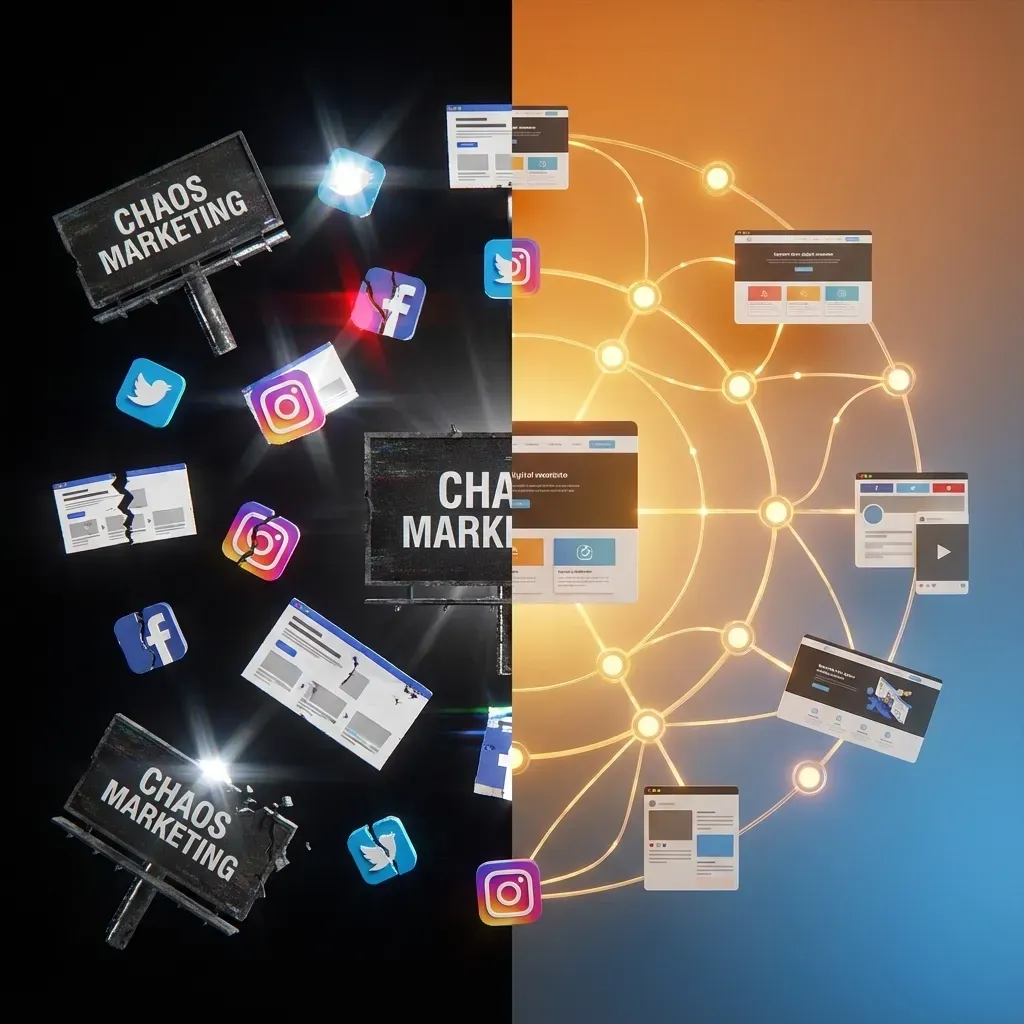
Every service business owner knows the truth: without visibility, there is no growth. But here's what most don't realize: visibility itself isn't the challenge anymore. The real problem is unstructured visibility that burns resources without building momentum. You're already posting content. You're running ads. You're showing up on social media. You might even be ranking for some keywords. But if growth feels inconsistent, if leads come in waves rather than steady streams, and if you're constantly "starting over" each month, the issue isn't that you need more visibility. It's that your visibility isn't designed to compound. In today's market, business visibility is non-negotiable. But the structure of that visibility: how it connects, reinforces, and builds upon itself: determines whether you're building a growth engine or just making noise. The Two Types of Visibility: Random vs. Strategic Most businesses operate with random visibility. They post when they remember. They run ads when budgets allow. They update their website occasionally. They respond to reviews when they notice them. Each effort exists in isolation, creating temporary spikes of awareness that fade as quickly as they appeared. Random visibility feels like progress because it generates activity. But activity without architecture doesn't compound: it just creates more work. Strategic visibility, on the other hand, is engineered. Every piece of content serves multiple purposes. Every ad campaign feeds into a larger system. Every social media post connects to email sequences, retargeting campaigns, and search optimization. When someone discovers you through one channel, they encounter consistent messaging across every other touchpoint. The difference isn't complexity: it's connection. Strategic visibility treats each marketing effort as part of an ecosystem, not as standalone tactics. This is why some businesses see explosive growth while others with similar budgets struggle to gain traction. Why Visibility Drives Trust Before Conversion Here's the psychological reality of modern buying: trust is built before the first conversation ever happens. When prospects research your industry, they're not just looking for solutions: they're looking for signals of credibility, authority, and reliability. The mere exposure effect proves that familiarity breeds preference. The more often someone encounters your brand in relevant contexts, the more trustworthy you appear. But this only works when that exposure feels intentional and consistent, not accidental and sporadic. Consider how your ideal clients make decisions. They Google their problem and scan the first page of results. They check social media for recommendations. They read reviews and case studies. They visit websites and compare approaches. They might even ask AI tools for suggestions. At every stage of this journey, they're forming judgments about competence, professionalism, and fit. If your visibility is structured correctly, you're building trust at each touchpoint. If it's random, you're either invisible or inconsistent: both of which work against you. Marketing visibility strategy that compounds leverages this psychology intentionally. When prospects see you ranking for relevant searches, posting valuable content, earning positive reviews, and maintaining an active social presence, they arrive at their first conversation already convinced of your credibility. Where Visibility Breaks Down for Most Businesses The breakdown rarely happens at the visibility level: it happens at the connection level. Most service businesses have decent individual marketing efforts. Their website looks professional. Their social media content provides value. Their ads reach the right people. Their email newsletters are informative. But these efforts don't talk to each other.  Visibility without capture means prospects discover you, consume your content, and disappear without ever entering your system. There's no bridge from awareness to engagement. Visibility without follow-up means interested prospects slip through the cracks. They visit your website, download a resource, or engage with your content, but no automated system nurtures that interest into action. Visibility without sequencing means prospects encounter random pieces of your messaging in random order. Instead of experiencing a logical progression from awareness to consideration to decision, they get a confusing mix of introductory and advanced content. Visibility without attribution means you can't identify which visibility efforts actually drive results. You're visible, but you don't know which visibility creates value, so you can't optimize or double down on what works.
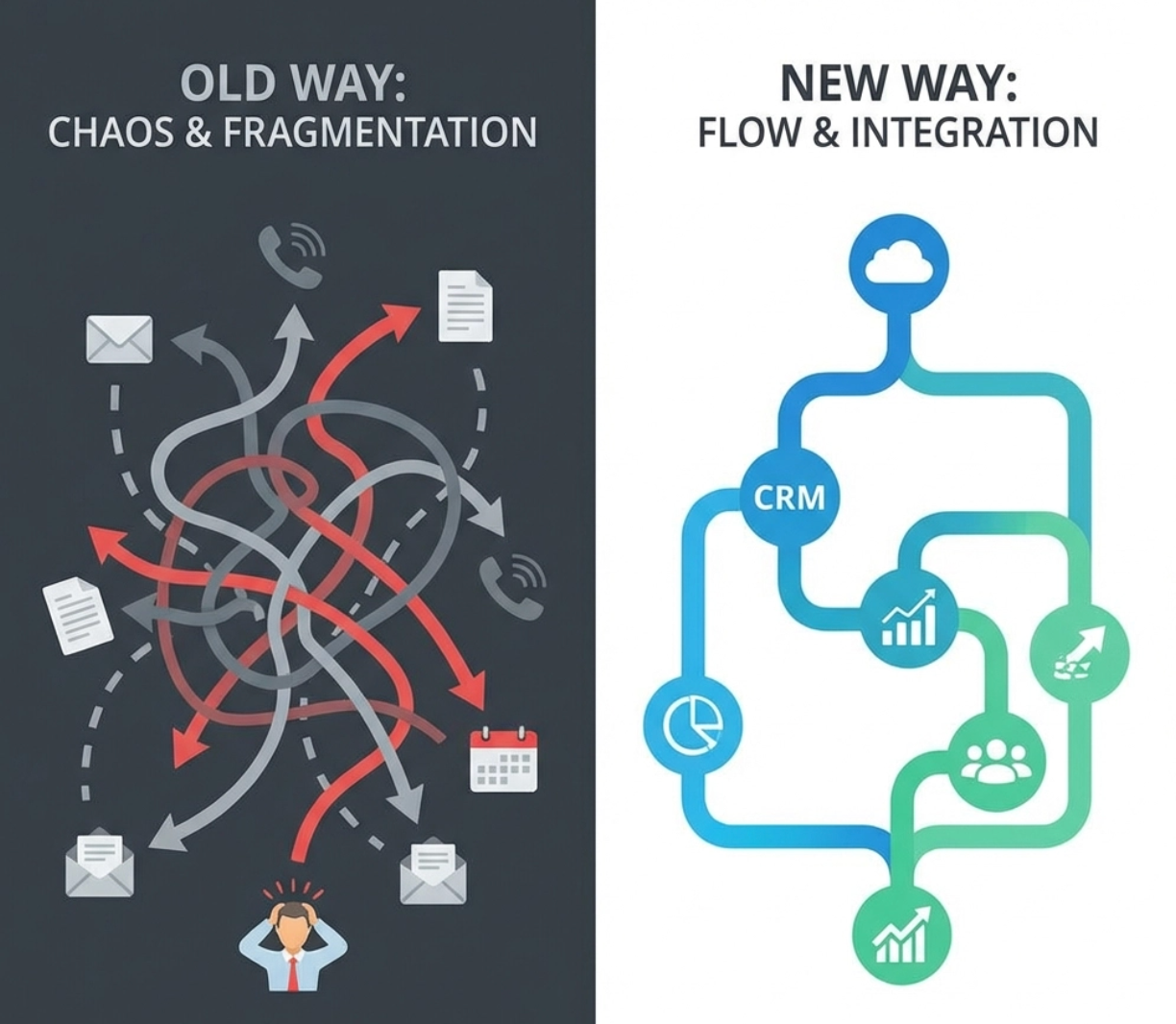
Comparison:
By Max Bergstrom December 30, 2025
Most service businesses try to grow by doing more marketing—but real, predictable growth comes from robust marketing infrastructure. Discover why systems, not scattered tactics, are the secret to consistent leads, visibility, and revenue. Learn how to build the foundation with Level Next Consulting.
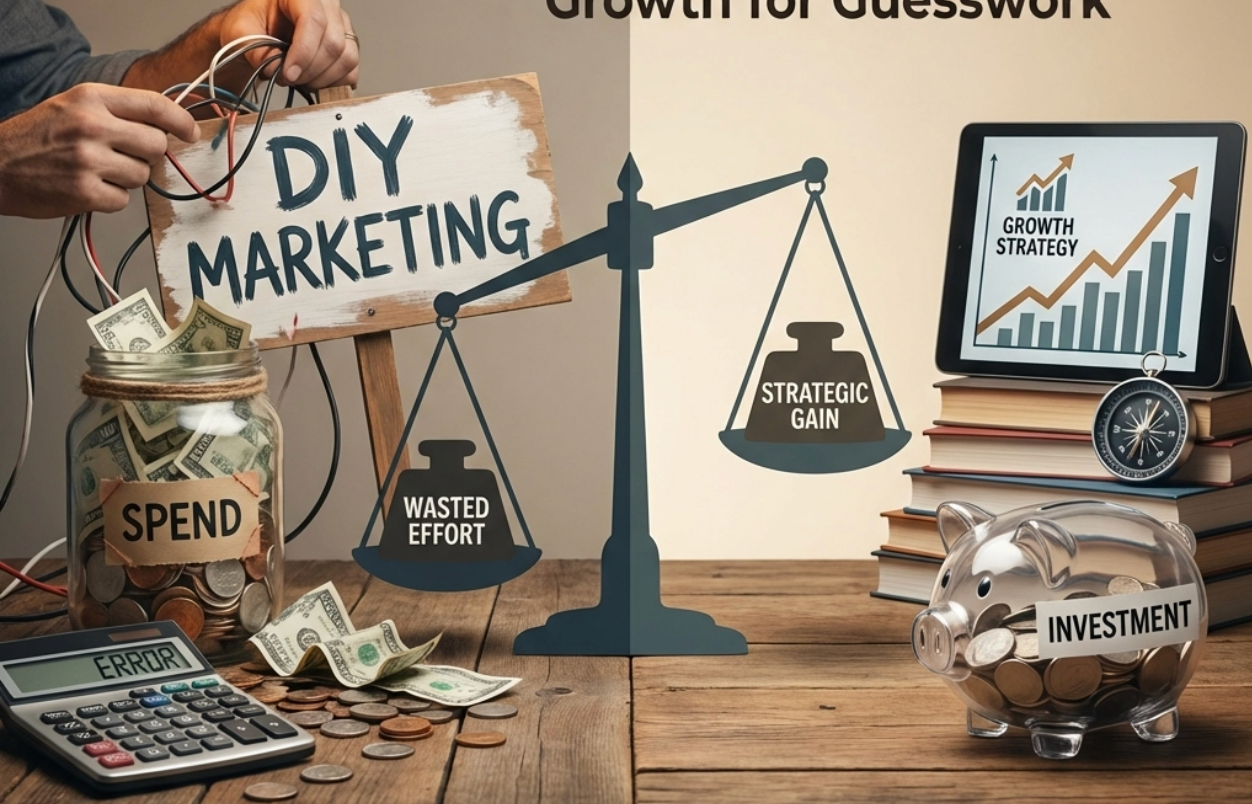
The Real Cost of DIY Marketing: How Wasted Spend Trades Growth for Guesswork
By Max Bergstrom December 26, 2025
Discover where DIY marketing costs your business more than you think. Learn how fragmented tactics waste money, miss leads, and stall growth—and how a connected marketing system delivers predictable results. Tailored for service-based business owners ready to scale smarter.