How to Stop Relying on Referrals and Build a Predictable Inbound Lead System for Your B2B Service Business

Share this article

How to Stop Relying on Referrals and Build a Predictable Inbound Lead System for Your B2B Service Business


You have built something real. You have happy clients, a solid track record, and a reputation that precedes you in your industry. For a while, that was enough. Word of mouth kept the pipeline moving, referrals landed in your inbox, and growth felt organic.


But somewhere along the way, "organic" started feeling like "unpredictable." One strong quarter followed by two slow ones. A drought between referrals. Projects are wrapping up while new ones are nowhere in sight. The feast-or-famine cycle is not a mindset problem; it is a systems problem.


If you are an established B2B service business doing $250K to $5M in revenue, and you are tired of depending on who someone happens to mention your name to, this post is for you. We are going to break down exactly why referrals alone are holding your growth hostage, and what it actually takes to build a predictable inbound lead generation system that works without you chasing it.


Why Referrals Are a Growth Ceiling, Not a Growth Strategy


Let us be honest about what referrals actually are: they are a lagging indicator of past excellence. They reward work you have already done, often months or years ago. And while they are a powerful signal of trust, they have three fundamental problems that make them a dangerous primary growth strategy when you are trying to stop relying on referrals for business.


You cannot control the volume. Referrals arrive on someone else's timeline. When they stop, because your client moved jobs, retired, or simply forgot, your pipeline dries up without warning.


You cannot control the quality. Referral clients vary wildly in fit, budget, and expectations. You take what comes, not what you are built to serve best.


You cannot scale what you cannot predict. If you cannot forecast lead flow, you cannot plan hiring, capacity, or investment. Your business stays reactive instead of becoming intentional.


The moment you stop relying on referrals for business and start building a system that generates demand is the moment you shift from a practice to a scalable company.


What a Predictable Inbound Lead Generation System Actually Looks Like


A lot of service businesses try to fix the referral problem by adding a tactic: post more on LinkedIn, run some ads, start a newsletter. The results are usually disappointing. Not because the tactics are wrong, but because tactics without a system are just noise.


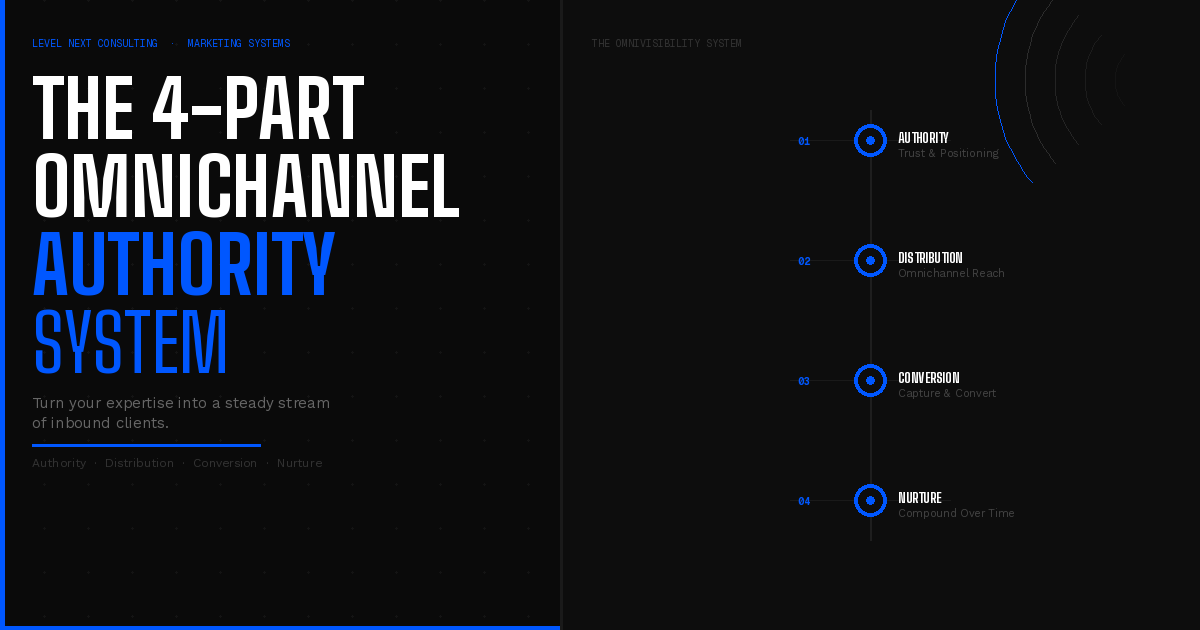
Predictable lead generation for service businesses requires four integrated components working together, not four separate projects handed to four different vendors.


1. Authority Content That Makes You the Obvious Choice


Before anyone reaches out, they need a reason to trust you without you being in the room. That is what authoritative content does. It is not about posting for engagement or going viral. It is strategically crafted long-form content: blog posts, LinkedIn articles, case studies, video breakdowns, all designed to answer the exact questions your ideal client is already searching for.


When someone types "how to get consistent clients without referrals" or "predictable lead generation for service businesses" into Google or LinkedIn, and your content is the answer they find, you have just earned trust before a single conversation has happened. You become the authority in their mind before they ever click to your website.


This is the foundation of a B2B inbound marketing system: show up where your clients are already looking, with the expertise they are already seeking.


2. Omnichannel Distribution That Multiplies Your Reach


Creating great content is only half the equation. If it sits on your website and nowhere else, it is not working hard enough. A real inbound system distributes your authority content across multiple channels simultaneously: your website and SEO, LinkedIn and social, email to your existing audience, video platforms, and paid amplification once organic is established.


The businesses that build predictable lead flow are not posting more; they are publishing smarter. One well-crafted piece of authority content, distributed across five channels with a consistent narrative, outperforms five disconnected posts every single time. This is what omnichannel marketing means in practice: not just being everywhere, but being cohesive everywhere.


3. Conversion Pathways That Turn Attention Into Inbound Opportunities


Traffic and visibility mean nothing without clear conversion paths. Most service business websites are beautiful brochures; they impress, but they do not convert. A high-performing B2B inbound marketing system includes deliberate mechanisms to capture interested visitors: a compelling lead magnet, a low-friction booking or inquiry flow, and a clear call to action that speaks to where the visitor is in their buying journey.


The goal is not to trick anyone into a call. It is to make the next step so obvious and so relevant that interested buyers actually take it, instead of clicking away and forgetting you existed. When your authority content earns attention, and your conversion pathway captures it, you stop relying on referrals to deliver warm leads. You build your own pipeline.


4. Nurture Systems That Compound Trust Over Time


Here is the reality most service businesses overlook: the majority of your ideal clients are not ready to buy today. They are aware they have a problem. They are evaluating options. They are building trust in who they might hire. A nurture system, usually email but also retargeting and ongoing content, keeps you present and credible throughout that entire evaluation window.


So when they are ready, you are not just familiar. You are the obvious choice. This is how you get consistent clients without referrals: by staying in front of the right people consistently, with content that builds trust rather than simply promoting your services.


The Integrated System vs. The Fragmented Approach


Here is where most businesses go wrong when they try to build an inbound system: they treat each component as a separate project. They hire a freelancer for content, an agency for ads, a VA for email, and a web designer for the site. Each piece gets built independently with no shared strategy, no unified narrative, and no feedback loop between them.


The result? Content that does not convert. Ads that do not build authority. Email that no one opens. Traffic that goes nowhere. A true B2B inbound marketing system is not a collection of tactics; it is an integrated engine where every component supports the same narrative and feeds into the next.


When it is built as a system, it gets stronger every month. You are not starting from zero every quarter, chasing the next referral. You are compounding.


What This Looks Like for Established Service Businesses


Whether you are a B2B consulting firm, a high-ticket coach, a managed service provider, a contractor, or any other established service business, your path to predictable inbound lead generation follows a clear arc.


Months 1 to 3: Build the authority foundation. Define your positioning. Identify the exact questions your ideal client asks before hiring someone like you. Create cornerstone content that answers those questions definitively, then establish your conversion pathway.


Months 3 to 6: Distribute and compound. Your authority content is now published and distributed across channels. SEO begins to build. Your email list grows. Inbound inquiries start arriving from people who found you, not because someone mentioned your name, but because you showed up where they were already looking.


Month 6 and beyond: The system compounds. Content published in month one is still generating traffic and trust. Your email list is larger and warmer. Conversion rates improve as you optimize. Referrals still come, but now they are a bonus, not your lifeline.


This is what it means to stop relying on referrals for business: not eliminating them, but making them irrelevant to your survival.


The Authority Advantage: Why Trust Is the Real Differentiator


In B2B service markets, buying decisions are high-stakes and trust-driven. Your ideal client is not just buying a deliverable; they are trusting you with their business, their time, and often their reputation. Authority content shortens the trust-building timeline considerably. Instead of earning trust through a slow series of meetings and introductions, you earn it through demonstrated expertise.


Your blog post answers a question they had. Your case study shows the result they want. Your email teaches them something they did not know. By the time they reach out, they already trust you. This is the authority advantage, and it is why a well-built inbound system does not just generate leads. It generates the right leads: buyers who already believe in your expertise and are primed to say yes.


Your Next Step: Stop Guessing, Start Systemizing


If you have read this far, you already know that referrals are not enough. You know the feast-or-famine cycle is a growth ceiling, not an inevitability. And you know that the answer is a real system: not more tactics, not another freelancer, not a one-off campaign.


Start with a custom Visibility & Growth Blueprint, a diagnostic that maps your current marketing reality, identifies where growth is leaking, and lays out the integrated system required to generate consistent inbound leads, tailored to your business, your audience, and your goals.


You will walk away with a clear roadmap, whether you work with us or not.


Request Your Visibility & Growth Blueprint


LevelNext Consulting builds integrated omnichannel marketing systems for established B2B and service-based businesses ready to scale with predictable inbound leads. Based in San Diego, CA. Learn more at levelnextconsulting.io.

Recent Posts

Digital marketing office with a skyline background
By Jade Cañete May 4, 2026
Your website is getting traffic, but no leads? Discover the real reason service businesses don't convert visitors, and the system fix that changes everything.

How to Rank in AI Search: The New Visibility Playbook for Businesses in 2026
By Max Bergstrom January 7, 2026
Learn how to rank in AI search, including ChatGPT and Google’s AI results, and discover how to improve visibility with a clear, proven strategy.
By Max Bergstrom January 5, 2026
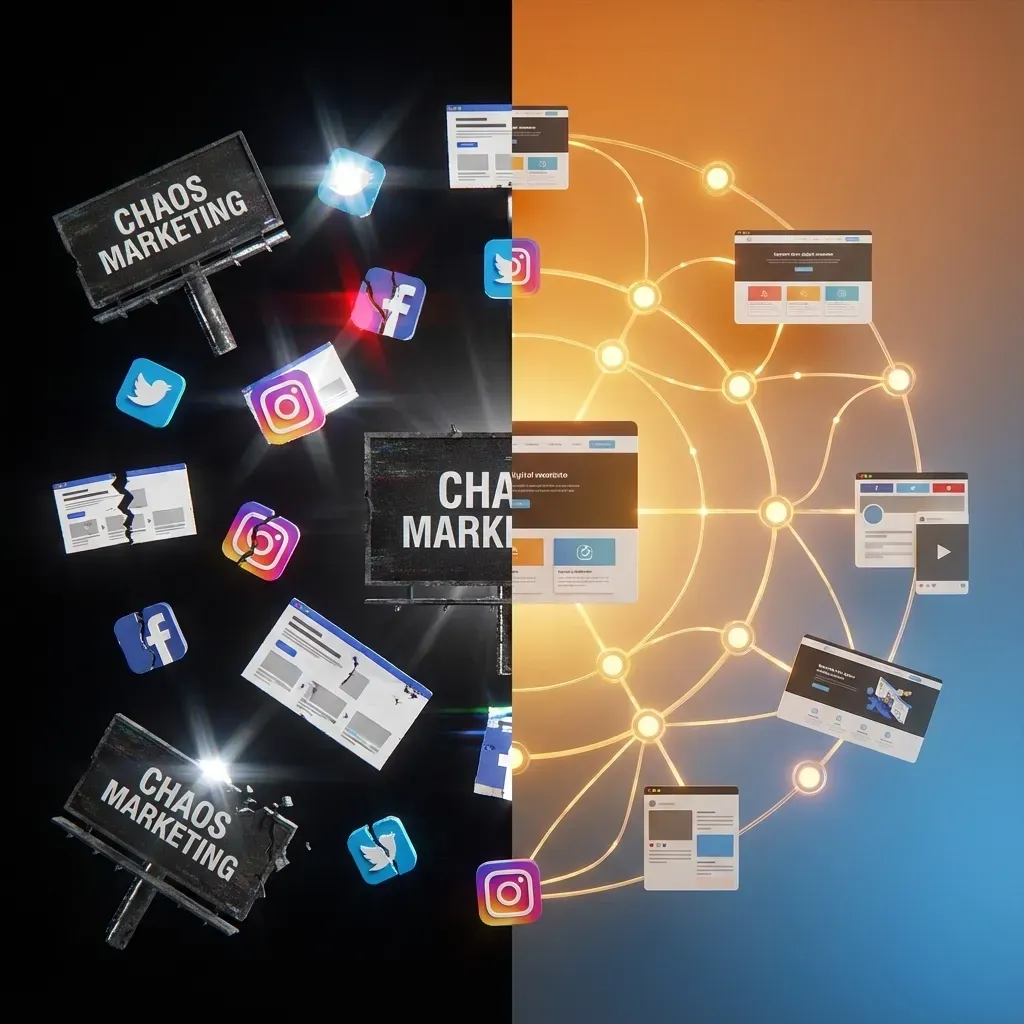
Every service business owner knows the truth: without visibility, there is no growth. But here's what most don't realize: visibility itself isn't the challenge anymore. The real problem is unstructured visibility that burns resources without building momentum. You're already posting content. You're running ads. You're showing up on social media. You might even be ranking for some keywords. But if growth feels inconsistent, if leads come in waves rather than steady streams, and if you're constantly "starting over" each month, the issue isn't that you need more visibility. It's that your visibility isn't designed to compound. In today's market, business visibility is non-negotiable. But the structure of that visibility: how it connects, reinforces, and builds upon itself: determines whether you're building a growth engine or just making noise. The Two Types of Visibility: Random vs. Strategic Most businesses operate with random visibility. They post when they remember. They run ads when budgets allow. They update their website occasionally. They respond to reviews when they notice them. Each effort exists in isolation, creating temporary spikes of awareness that fade as quickly as they appeared. Random visibility feels like progress because it generates activity. But activity without architecture doesn't compound: it just creates more work. Strategic visibility, on the other hand, is engineered. Every piece of content serves multiple purposes. Every ad campaign feeds into a larger system. Every social media post connects to email sequences, retargeting campaigns, and search optimization. When someone discovers you through one channel, they encounter consistent messaging across every other touchpoint. The difference isn't complexity: it's connection. Strategic visibility treats each marketing effort as part of an ecosystem, not as standalone tactics. This is why some businesses see explosive growth while others with similar budgets struggle to gain traction. Why Visibility Drives Trust Before Conversion Here's the psychological reality of modern buying: trust is built before the first conversation ever happens. When prospects research your industry, they're not just looking for solutions: they're looking for signals of credibility, authority, and reliability. The mere exposure effect proves that familiarity breeds preference. The more often someone encounters your brand in relevant contexts, the more trustworthy you appear. But this only works when that exposure feels intentional and consistent, not accidental and sporadic. Consider how your ideal clients make decisions. They Google their problem and scan the first page of results. They check social media for recommendations. They read reviews and case studies. They visit websites and compare approaches. They might even ask AI tools for suggestions. At every stage of this journey, they're forming judgments about competence, professionalism, and fit. If your visibility is structured correctly, you're building trust at each touchpoint. If it's random, you're either invisible or inconsistent: both of which work against you. Marketing visibility strategy that compounds leverages this psychology intentionally. When prospects see you ranking for relevant searches, posting valuable content, earning positive reviews, and maintaining an active social presence, they arrive at their first conversation already convinced of your credibility. Where Visibility Breaks Down for Most Businesses The breakdown rarely happens at the visibility level: it happens at the connection level. Most service businesses have decent individual marketing efforts. Their website looks professional. Their social media content provides value. Their ads reach the right people. Their email newsletters are informative. But these efforts don't talk to each other.  Visibility without capture means prospects discover you, consume your content, and disappear without ever entering your system. There's no bridge from awareness to engagement. Visibility without follow-up means interested prospects slip through the cracks. They visit your website, download a resource, or engage with your content, but no automated system nurtures that interest into action. Visibility without sequencing means prospects encounter random pieces of your messaging in random order. Instead of experiencing a logical progression from awareness to consideration to decision, they get a confusing mix of introductory and advanced content. Visibility without attribution means you can't identify which visibility efforts actually drive results. You're visible, but you don't know which visibility creates value, so you can't optimize or double down on what works.
Comparison:
By Max Bergstrom December 30, 2025
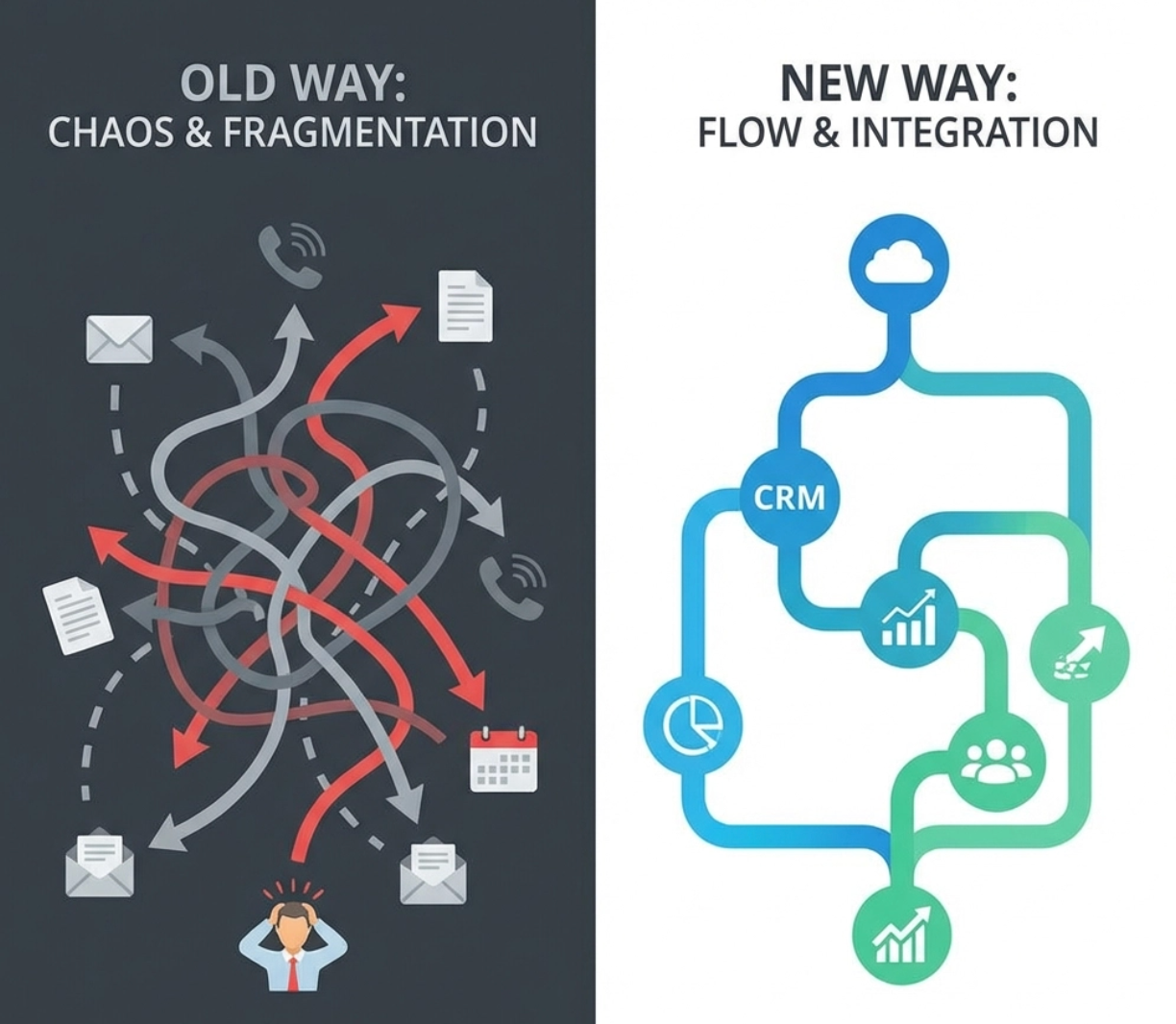
Most service businesses try to grow by doing more marketing—but real, predictable growth comes from robust marketing infrastructure. Discover why systems, not scattered tactics, are the secret to consistent leads, visibility, and revenue. Learn how to build the foundation with Level Next Consulting.
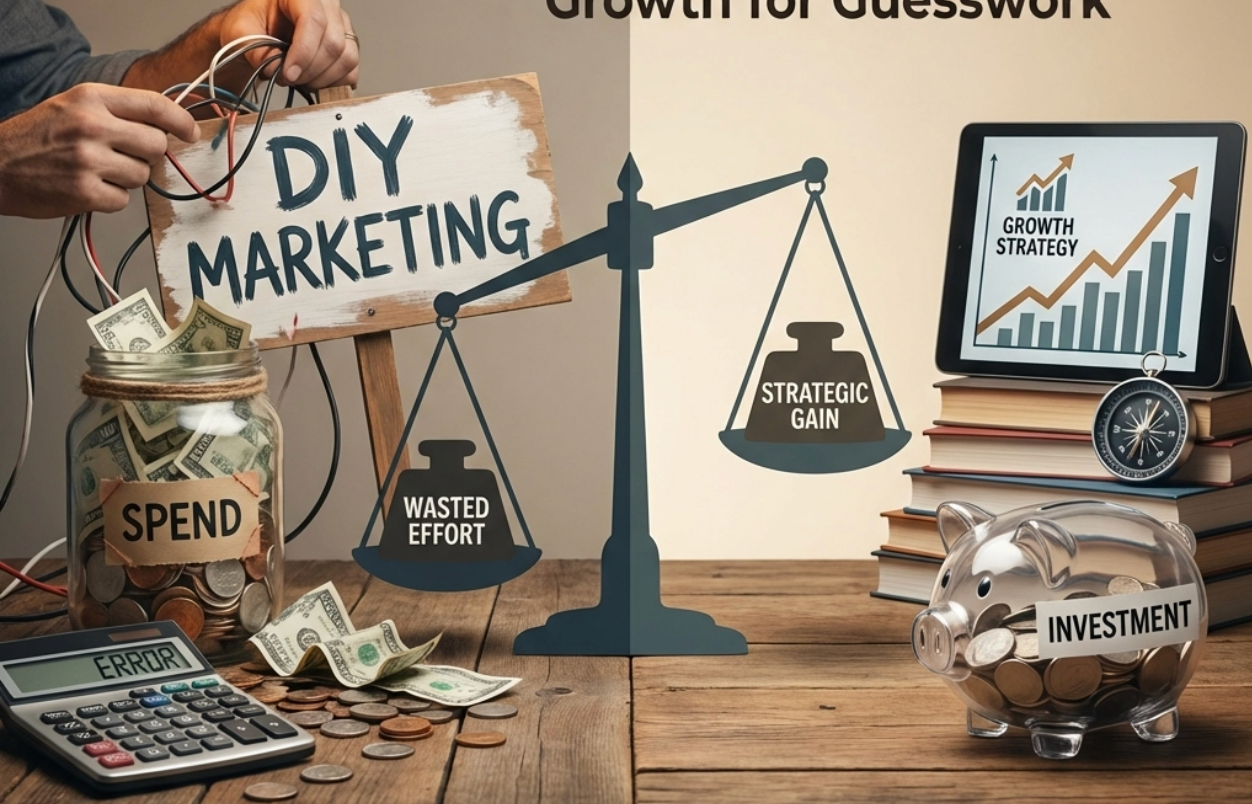
The Real Cost of DIY Marketing: How Wasted Spend Trades Growth for Guesswork
By Max Bergstrom December 26, 2025
Discover where DIY marketing costs your business more than you think. Learn how fragmented tactics waste money, miss leads, and stall growth—and how a connected marketing system delivers predictable results. Tailored for service-based business owners ready to scale smarter.