Managing Multiple Marketing Agencies Is Silently Killing Your Growth — Here's What a Unified System Does Instead

Share this article

This is a subtitle for your new post

You hired an SEO agency to get found on Google. Then you brought in a social media freelancer to stay visible on Instagram and LinkedIn. Then you added an ads manager because organic just wasn't moving fast enough.

Three vendors. Three invoices. Three different strategies, calendars, and communication threads.

And somehow, your growth still feels stuck.


If you're tired of managing marketing agencies while playing referee between people who never talk to each other, this isn't a vendor problem. It's a structural one. And the longer you try to fix a structural problem with more vendors, the more expensive that mistake gets.


Why the Multi-Agency Model Feels Like It Should Work

On paper, the logic makes sense. You hire experts. Each person does what they're best at. You get specialized execution without needing to build an in-house team. Clean, lean, and affordable.

The problem is that marketing doesn't work in silos. It never did.


Your SEO strategy has to inform what your social media says. Your ad copy has to connect to the landing page your developer built. Your email nurture has to align with what your ads manager is targeting. When those pieces are owned by three separate vendors with three separate goals, the seams start to show.

And the worst part? Nobody owns the gap between the silos. Nobody is accountable for what falls through.

That's where your growth goes.


The Finger-Pointing Problem Nobody Talks About

Here's a scenario that will feel familiar.


Your leads slow down. You ask your ad manager what's happening. They tell you the ads are performing fine, but the landing page isn't converting. You go to your web developer. They say the page looks good, but the traffic quality from ads is poor. You go back to your ad manager. They point to your SEO agency and say organic rankings aren't strong enough to support brand recognition.


Meanwhile, you're in the middle of all of this, forwarding emails, scheduling calls, trying to translate each person's jargon, and spending real hours every week just keeping people aligned.


This is what it looks like when you stop managing freelancers for marketing and realize the model itself was the problem. Nobody is lying to you. Each vendor is probably doing their part reasonably well. But fragmented effort rarely adds up to unified growth. It adds up to wasted budget and a founder who's more project manager than CEO.


What Fragmentation Actually Costs You

The obvious cost is time. A business owner who's coordinating three vendors is spending anywhere from five to ten hours a week on marketing operations work. That's not a strategy. That's administration.


But the hidden cost is compounding.


When your messaging isn't consistent across channels, prospects get confused. When your SEO content doesn't connect to your paid ads, you're paying to reach the same audience twice with two different stories. When your social media freelancer doesn't know what your ads manager is testing, you lose the opportunity to reinforce what's already working.


Every dollar you spend on fragmented marketing has a lower return than it should, because the pieces aren't amplifying each other. They're operating in parallel.


And the referral-dependent businesses we work with feel this most acutely. You've been growing on word-of-mouth. You know the work is good. But you can't explain what your marketing is actually doing, and you definitely can't predict what next month's lead flow is going to look like.

That's not a vendor problem. That's a systems problem.


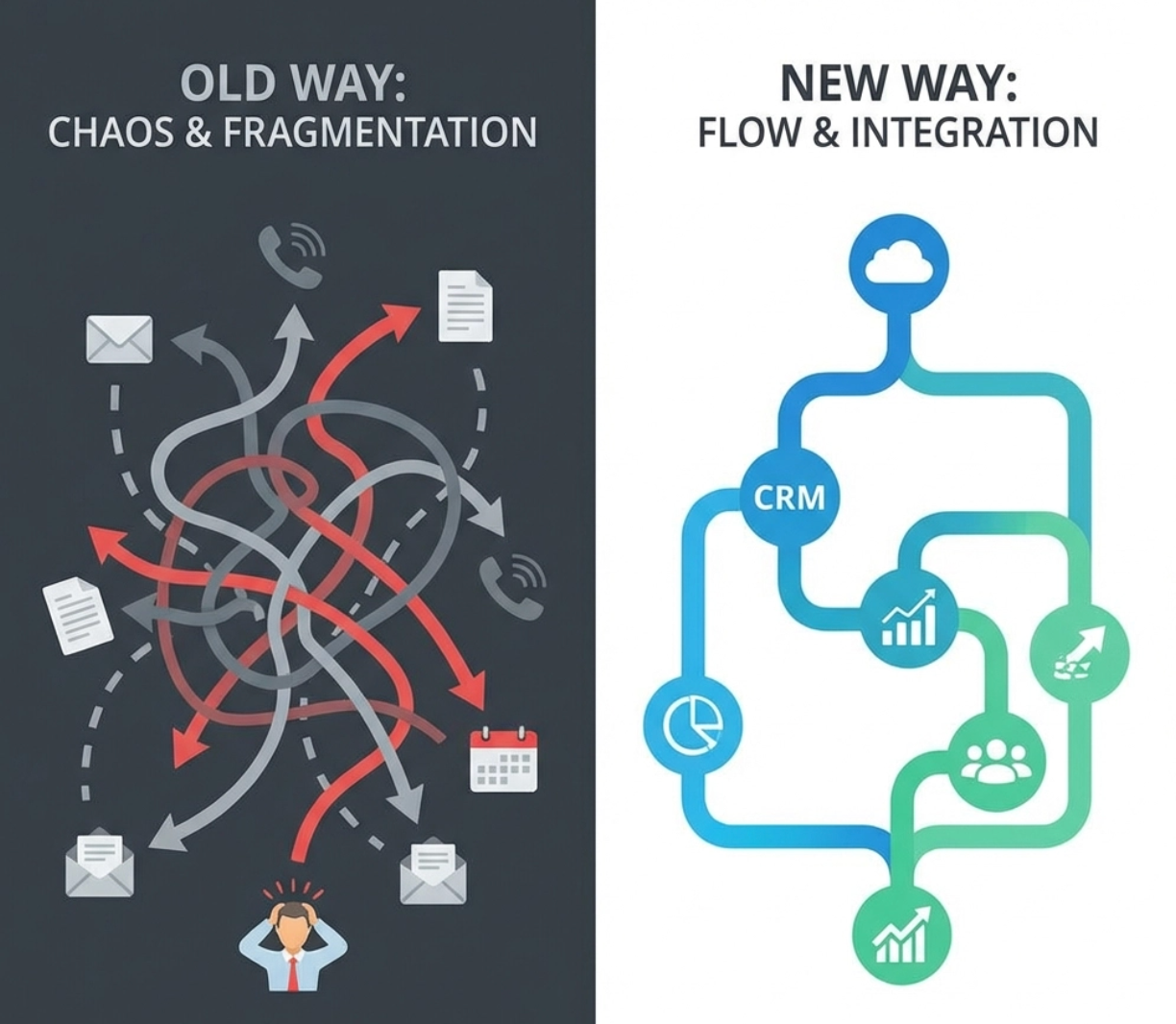
The Comparison No One Wants to Have: Agency Model vs. Done-for-You Integrated System

Let's put the two models side by side and be honest about what each one actually delivers.


The Multi-Agency Model


You manage the relationships. You connect the dots. You translate between vendors who use different reporting dashboards, different success metrics, and different vocabularies. When something breaks, you find out last. When something works, you're not entirely sure which piece gets the credit.


Strategy is fragmented by default. Each vendor optimizes for their own deliverables, not for your business outcome. Your SEO agency wants rankings. Your ad manager wants a low cost per click. Your social media freelancer wants engagement. None of those metrics necessarily translates into revenue on their own.


You also carry the full coordination cost. Every new campaign, every seasonal shift, every pivot in your business requires you to brief three separate teams and hope they all update accordingly.


The Unified Marketing System for Small Business


One partner. One strategy. One point of accountability.


Your SEO content, paid ads, social media, email nurture, and conversion path are all designed together and managed together. When your ad creative needs to change because your SEO data identified a better keyword angle, that happens without a meeting chain. When your email list needs a new sequence because your social audience is responding to a specific topic, it gets built in context, not in isolation.


The messaging is consistent everywhere your prospect encounters you. The data from each channel feeds back into the rest. And when results need to improve, there's no finger-pointing because one team owns the whole system.


This is the core of what a done-for-you system actually does. It removes the coordination tax you've been paying without realizing it.


What a Unified Marketing System Looks Like in Practice

At Level Next, we call it the OmniVisibility System. It's built around the idea that growth doesn't come from doing more marketing. It comes from doing it together.


Here's how the pieces connect.


Authority and Trust. Long-form content, strategic positioning, and credibility signals that make you the obvious choice in your category. This is the foundation. Without it, every dollar you spend on ads and distribution is building on sand.


Omnichannel Distribution. That content gets deployed strategically across search, social, video, and owned media. Not by copying and pasting. By adapting it to each channel in a way that reinforces the same core narrative. Someone who finds you on LinkedIn and then searches for you on Google should feel like they're encountering the same brand with the same message, not two different companies.


Conversion and Capture. Clear, intentional paths that turn attention into action. This is where most fragmented marketing fails. You're getting visitors. You're getting followers. But if the conversion path isn't connected to the awareness work, you're leaking leads at every stage.


Nurture and Compounding. Email sequences and content funnels that keep building trust after the first touchpoint. Most buyers don't convert immediately. The businesses that win are the ones that stay visible and relevant through the full decision cycle.


When these four pieces are integrated and managed by one accountable partner, something shifts. Marketing stops feeling like a cost center you're constantly chasing and starts operating like a system you can trust.


Why "One Accountable Partner" Changes Everything

There's a psychological shift that happens when you stop managing freelancers for marketing and hand it over to one integrated team.


You stop being the glue.


You stop spending mental energy on coordination. You stop being the person who has to synthesize what the SEO agency said with what the ads manager needs. You stop wondering whether the social content is aligned with the campaign your ads team is running.


One partner knows your business. One partner knows your positioning. One partner is responsible for results across the entire funnel, not just their slice of it. When something isn't working, they fix it. When something is working, they amplify it.


This is what a marketing agency versus done-for-you system comparison always comes back to. An agency (or a collection of freelancers) gives you execution. A unified system gives you outcomes.


Who This Is For

The business owners who get the most out of switching to a unified system tend to look like this.


They're established. Revenue is somewhere in the $250K to $5M range. The business works. The delivery is solid. The problem is that marketing has become a second job that nobody hired them to do.


They've tried the multi-vendor approach. They've paid for SEO, ads, and social separately. They've had the frustrating calls where everyone has a reason things aren't working, and nobody has a clear answer for how to fix it.


They're done with that model. They want one team that handles the strategy, builds the system, runs the execution, and is accountable for the result. Not just their slice of it. All of it.

If that's where you are, the next step isn't hiring another vendor. It's building a system.


The 90-Day Guarantee

We make this simple. Within the first 90 days of working together, you will see measurable improvement across visibility, engagement, and inbound opportunity. If you don't, we keep working at no cost until you do.


That's the kind of guarantee that only makes sense when one team owns the entire system. Because we can't hide behind finger-pointing. There's nobody to point to but us.


Start With a Visibility and Growth Blueprint

Every engagement at Level Next begins with a custom diagnostic we call the Visibility and Growth Blueprint.


We look at what's working in your current marketing, where growth is leaking, and what a connected system would look like for your specific business and goals. You walk away with a clear roadmap regardless of whether we end up working together.


If you're tired of managing marketing agencies and ready to see what a unified system actually looks like for your business, this is where to start.


Request Your Visibility and Growth Blueprint


Level Next Consulting designs and runs omnichannel marketing systems for established service businesses that want consistent growth without managing agencies, freelancers, or tech stacks.

Recent Posts

By Jade Cañete May 8, 2026
Stop relying on referrals. Build a predictable inbound lead system for your B2B service business. Start generating consistent leads today!

Digital marketing office with a skyline background
By Jade Cañete May 4, 2026
Your website is getting traffic, but no leads? Discover the real reason service businesses don't convert visitors, and the system fix that changes everything.

How to Rank in AI Search: The New Visibility Playbook for Businesses in 2026
By Max Bergstrom January 7, 2026
Learn how to rank in AI search, including ChatGPT and Google’s AI results, and discover how to improve visibility with a clear, proven strategy.
By Max Bergstrom January 5, 2026
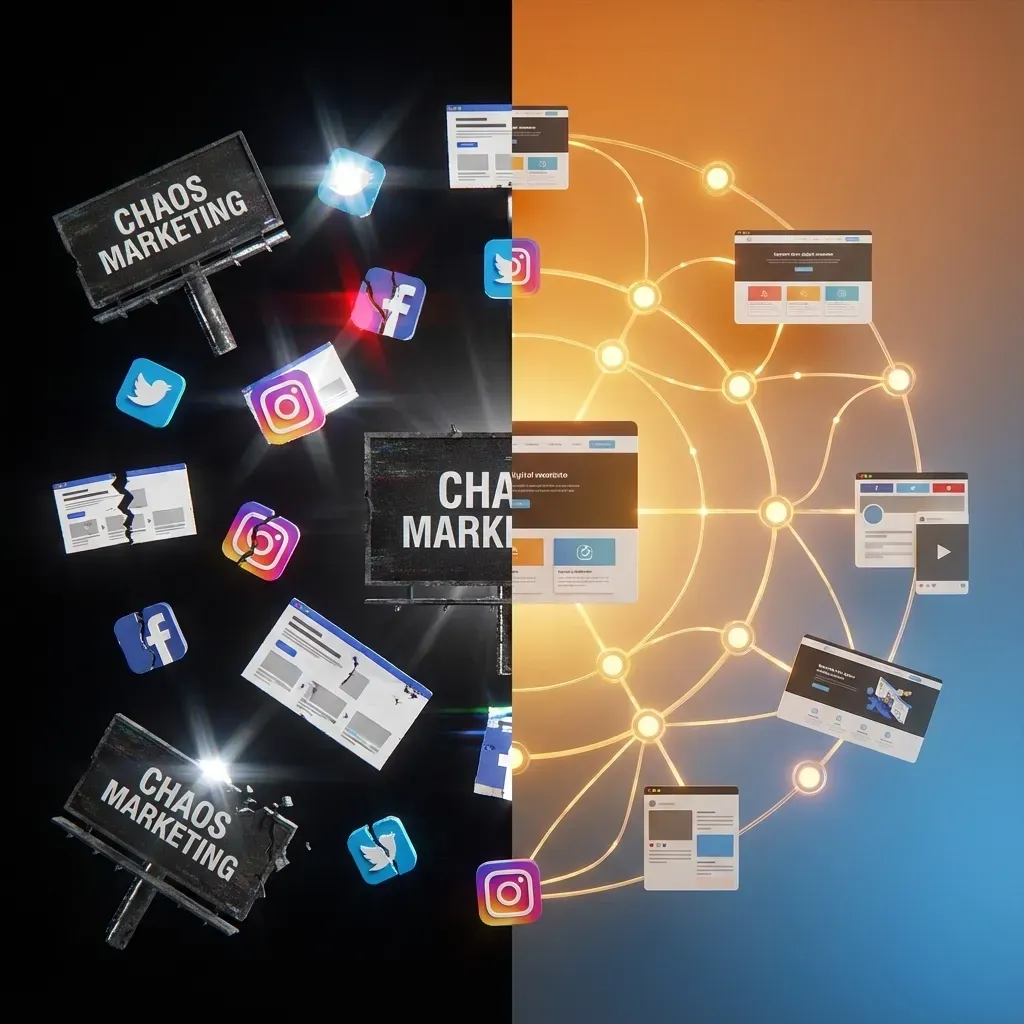
Every service business owner knows the truth: without visibility, there is no growth. But here's what most don't realize: visibility itself isn't the challenge anymore. The real problem is unstructured visibility that burns resources without building momentum. You're already posting content. You're running ads. You're showing up on social media. You might even be ranking for some keywords. But if growth feels inconsistent, if leads come in waves rather than steady streams, and if you're constantly "starting over" each month, the issue isn't that you need more visibility. It's that your visibility isn't designed to compound. In today's market, business visibility is non-negotiable. But the structure of that visibility: how it connects, reinforces, and builds upon itself: determines whether you're building a growth engine or just making noise. The Two Types of Visibility: Random vs. Strategic Most businesses operate with random visibility. They post when they remember. They run ads when budgets allow. They update their website occasionally. They respond to reviews when they notice them. Each effort exists in isolation, creating temporary spikes of awareness that fade as quickly as they appeared. Random visibility feels like progress because it generates activity. But activity without architecture doesn't compound: it just creates more work. Strategic visibility, on the other hand, is engineered. Every piece of content serves multiple purposes. Every ad campaign feeds into a larger system. Every social media post connects to email sequences, retargeting campaigns, and search optimization. When someone discovers you through one channel, they encounter consistent messaging across every other touchpoint. The difference isn't complexity: it's connection. Strategic visibility treats each marketing effort as part of an ecosystem, not as standalone tactics. This is why some businesses see explosive growth while others with similar budgets struggle to gain traction. Why Visibility Drives Trust Before Conversion Here's the psychological reality of modern buying: trust is built before the first conversation ever happens. When prospects research your industry, they're not just looking for solutions: they're looking for signals of credibility, authority, and reliability. The mere exposure effect proves that familiarity breeds preference. The more often someone encounters your brand in relevant contexts, the more trustworthy you appear. But this only works when that exposure feels intentional and consistent, not accidental and sporadic. Consider how your ideal clients make decisions. They Google their problem and scan the first page of results. They check social media for recommendations. They read reviews and case studies. They visit websites and compare approaches. They might even ask AI tools for suggestions. At every stage of this journey, they're forming judgments about competence, professionalism, and fit. If your visibility is structured correctly, you're building trust at each touchpoint. If it's random, you're either invisible or inconsistent: both of which work against you. Marketing visibility strategy that compounds leverages this psychology intentionally. When prospects see you ranking for relevant searches, posting valuable content, earning positive reviews, and maintaining an active social presence, they arrive at their first conversation already convinced of your credibility. Where Visibility Breaks Down for Most Businesses The breakdown rarely happens at the visibility level: it happens at the connection level. Most service businesses have decent individual marketing efforts. Their website looks professional. Their social media content provides value. Their ads reach the right people. Their email newsletters are informative. But these efforts don't talk to each other.  Visibility without capture means prospects discover you, consume your content, and disappear without ever entering your system. There's no bridge from awareness to engagement. Visibility without follow-up means interested prospects slip through the cracks. They visit your website, download a resource, or engage with your content, but no automated system nurtures that interest into action. Visibility without sequencing means prospects encounter random pieces of your messaging in random order. Instead of experiencing a logical progression from awareness to consideration to decision, they get a confusing mix of introductory and advanced content. Visibility without attribution means you can't identify which visibility efforts actually drive results. You're visible, but you don't know which visibility creates value, so you can't optimize or double down on what works.
Comparison:
By Max Bergstrom December 30, 2025
Most service businesses try to grow by doing more marketing—but real, predictable growth comes from robust marketing infrastructure. Discover why systems, not scattered tactics, are the secret to consistent leads, visibility, and revenue. Learn how to build the foundation with Level Next Consulting.

The Real Cost of DIY Marketing: How Wasted Spend Trades Growth for Guesswork
By Max Bergstrom December 26, 2025
Discover where DIY marketing costs your business more than you think. Learn how fragmented tactics waste money, miss leads, and stall growth—and how a connected marketing system delivers predictable results. Tailored for service-based business owners ready to scale smarter.